P.O. Box 1 – 20115, Egerton, Kenya

Native Tree Species

Trees & shrubs for semi-arid ecosystems of Kenya — selected for ecological restoration, biodiversity enhancement, and long-term resilience.

Mwingi, Kitui, Mbeere, Isiolo, Machakos, Tana River, and similar semi-arid habitats.

Indigenous tree species selected for ecological restoration, biodiversity enhancement, carbon sequestration, watershed protection, pollinator support, and long-term ecosystem resilience in semi-arid Kenya.

Description of Tree and Shrub Species for Biodiversity Compensation in Semi-Arid Ecosystems of Kenya — Seven Forks Biodiversity Compensation.

51 species

Indigenous #1
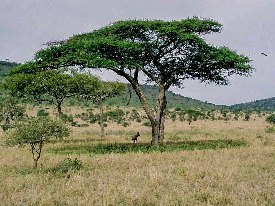
Umbrella Thorn

Umbrella Thorn

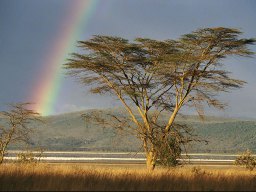
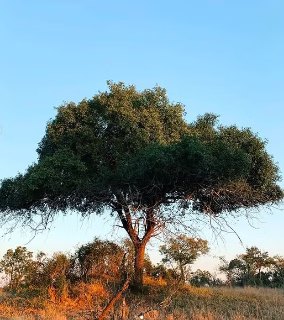
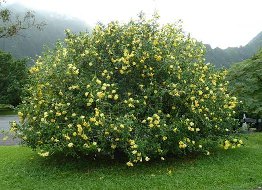
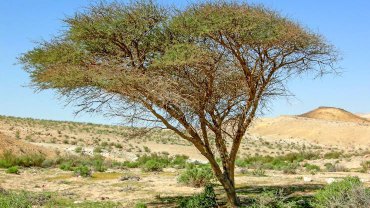
Acacia tortilis (Vachellia tortilis)

Local names
Kiseeli (Kamba), Mugaa (Embu/Kikuyu)
Growth habit
Medium to large tree (4 m - 21m) with a distinctive, flat-topped, umbrella- like canopy.
Propagation
Seed (requires scarification/nicking or soaking in hot water to break dormancy).
Ecological benefits
Highly crucial for nitrogen fixation, soil stabilization, and providing critical shade, browse (pods and leaves), and nesting sites for birds and diverse desert wildlife.
Indigenous #2
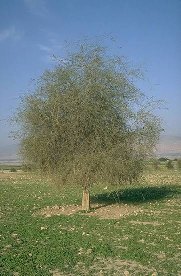
Gum Arabic Tree

Gum Arabic Tree

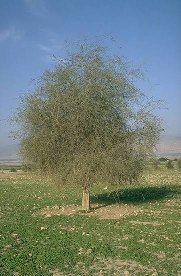
Acacia senegal (Senegalia senegal)

Local names
King'ole (Kamba), Munuga (Embu)
Growth habit
Small, thorny deciduous tree or shrub growing up to 5 m – 12 m tall with a low, spreading crown.
Propagation
Seed (requiressoakinginwarmwaterovernight).
Ecological benefits
Controls desertification via windbreaks, fixes atmospheric nitrogen, and produces gum that supports specialized insects and primates (like bushbabies). It produces high-quality gum arabic.
Indigenous #3
White Gall Thistle, Red Acacia

White Gall Thistle, Red Acacia

Acacia seyal (Vachellia seyal)

Local names
Musei (Kamba), Murera (Embu)
Growth habit
Small to medium tree 6 m - 10 m characterized by a smooth, powdery green or reddish-yellowbark.
Propagation
Seed (requireshotwatertreatment).
Ecological benefits
Fixes nitrogen in heavy clay soils (black cotton soils) where few other trees survive, providing essential dry-season fodder for livestock and wild herbivores. It produces gum and is used for firewood and timber.
Indigenous #4
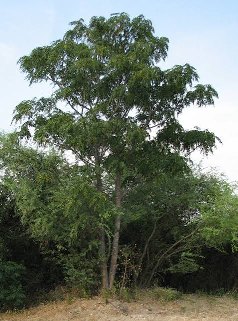
Fever Tree

Fever Tree

Acacia xanthophloea (Vachellia xanthophloea)

Local names
Murera (Embu/Kikuyu), Muyera (Kamba)
Growth habit
Tall, distinct tree 15 m – 25 m with smooth, lime-green to yellow bark and anopen,sparsecanopy.
Propagation
Seed (easilygerminatedafterabriefhotwatersoak).
Ecological benefits
Often found near semi-arid riverbeds and water tables; acts as a prominent nesting site for birds (especially weavers) and a food source for elephants andgiraffes.
Indigenous #5
Desert Date

Desert Date

Balanites aegyptiaca

Local names
Mulului (Kamba), Mubanjiru (Embu)
Growth habit
Small to medium, spiny evergreen tree growing up to 10 m with a narrow, tangledcrown.
Propagation
Seed (requires removing the fleshy fruit pulp and soaking the hard stone).
Ecological benefits
Survives extreme droughts; its highly nutritious fruits and leaves arealifelineforwildlifeduringdryspells.
Indigenous #6
Bird Plum

Bird Plum

Berchemia discolor

Local names
Kisaaya (Kamba), Mutuu (Embu)
Growth habit
Medium-sized deciduous tree 7 m - 15 m with a dense, rounded, and attractive crown.
Propagation
Seed (extractfromripefruit,soakfor 24hours).
Ecological benefits
Its sweet, edible fruits ("Ukambani dates") attract massive populations of birds, fruit bats,and monkeys,playinganintegralroleinlocalfood chains.
Indigenous #7
Shepherd's Tree

Shepherd's Tree

Boscia coriacea

Local names
Muvau (Kamba)1
Growth habit
Small, sturdy evergreen shrub or tree 2 m – 6 m with very rigid, leathery leaves.
Propagation
Seed orwildlings.
Ecological benefits
An ultimate survivalist plant that provides micro-climates of cool shade forground-dwellingfaunaduringpeaksemi-aridheat.
Indigenous #9
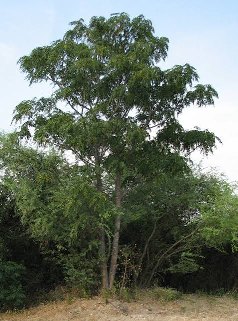
Persian Lilac, Chinaberry

Persian Lilac, Chinaberry

Melia azedarach

Local names
Mubenzi (Localadaptation)
Growth habit
Small to medium tree 6 m - 15 m with a rounded crown and clusters of lilacflowers.
Propagation
Seed.
Ecological benefits
While it provides quick shade and insecticidal properties, it must bemanagedcarefullyasitisexoticandcanbecomeinvasiveinmoistmicro-climates.
Indigenous #10
Grey-leaved Saucer Berry

Grey-leaved Saucer Berry

Cordia sinensis

Local names
Mukingi (Kamba), Murembu(Embu)
Growth habit
Multi-stemmed shrub or small crooked tree growing up to 5 m - 12 m.
Propagation
Seed orrootsuckers.
Ecological benefits
Serves as a vital riverine stabilizer along seasonal sand rivers (vleis/laghas)andyieldsheavyfruitcropsforbirds.
Indigenous #11
Broad-leaved Croton

Broad-leaved Croton

Croton megalocarpus

Local names
Mukinduri (Embu/Kikuyu), Mutundu(Kamba)
Growth habit
Large, dominant tree 15 m - 35 mwithadistinctiveflat,layeredcanopy.
Propagation
Seed(germinationishighwhenfresh).
Ecological benefits
Excellent upper-canopy habitat for raptors and bees; provides heavyleafmulchthatsignificantlybuildsorganicsoilmatter.
Indigenous #12
White Stinkwood

White Stinkwood

Celtis africana

Local names
Murundu (Embu), Mukorwe(Kikuyu)1 Meliaazedarach 1
Growth habit
Medium to large deciduous tree 10 m – 30 m with a smooth, pale grey trunk.
Propagation
Seed.
Ecological benefits
Attracts a vast array of insect-eating birds due to the larvae hostedonitsleaves,actingasanaturalpest-controlcatalystforsurroundingfarms.
Indigenous #13
Neem Tree

Neem Tree

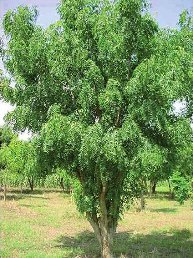
Azadirachta indica

Local names
Muarubaini (Swahili/Embu/Kamba)
Growth habit
Medium to large, fast-growing evergreen tree reaching 15 m - 20 m.
Propagation
Seed(mustbesownfresh;losesviabilityquickly).
Ecological benefits
Famous for its natural bio-pesticide properties. It helps repel harmful insects while actingasarobustwindbreaktoprotectvulnerabledrylandtopsoil.
Indigenous #14
Red Hot Poker Tree, Flame Tree

Red Hot Poker Tree, Flame Tree

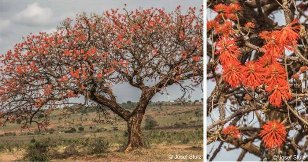
Erythrina abyssinica

Local names
Muhuti (Embu/Kikuyu), Kivuti(Kamba)
Growth habit
Small, corky-barked tree (5 m - 12 m) bearing striking, bright red flower spikeswhenleafless.
Propagation
Seed orlargewoodycuttings(truncheons).
Ecological benefits
The nectar-rich flowers are an early-season magnet for sunbirds andbeesbeforeotherplantsbloom.Itisalsoanactivenitrogen-fixer.
Indigenous #15
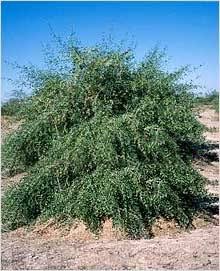
Governor’s Plum

Governor’s Plum

Flacourtia indica

Local names
Mukororo (Embu), Mutungi(Kamba)
Growth habit
Spiny shrub or small tree growing up to 5 m - 10 m with a bushy appearance.
Propagation
Seed orrootsuckers.
Ecological benefits
Forms dense, protective thickets that guard small mammals againstpredators,whileprovidingabundantfleshyberriesforlocalwildlife.
Indigenous #16
Savanna Gardenia

Savanna Gardenia

Gardenia volkensii

Local names
Mukurukurunje (Embu/Mbeere)
Growth habit
Small, heavily branched tree (3 m – 8 m) with rigid, grey ribs and fragrant whiteflowersturningyellow.
Propagation
Seed.
Ecological benefits
Flowers support nocturnal pollinators (moths), and the specializedwoodystructureprovidesexcellent,securenestingforksforsmallbirds.
Indigenous #17
Nile Tulip

Nile Tulip

Markhamia lutea

Local names
Muu (Embu/Kikuyu), Mwanzu(Kamba)
Growth habit
Medium, upright evergreen tree growing up to 10 m - 15 m with bright yellow,trumpet-shapedflowers.
Propagation
Seed(wingedseedsgerminateeasilywithoutpre-treatment).
Ecological benefits
Used widely in dryland boundary planting; improves micro- climatesandservesasasustainablesourceofmulch.
Indigenous #18
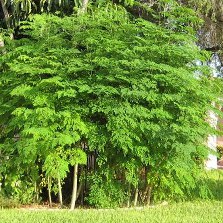
Horseradish Tree / Miracle Tree

Horseradish Tree / Miracle Tree

Moringa oleifera

Local names
Muringa (Adapted))
Growth habit
Small, slender, fast-growing tree (5 m - 12 m)withdroopingbranches.
Propagation
Seed orstemcuttings.
Ecological benefits
Biomass from its frequent leaf drops boosts soil microorganisms. Itscontinuousfloweringoffersapermanentforagesourceforhoneybees.
Indigenous #19
Forest Newtonia

Forest Newtonia

Newtonia buchananii

Local names
Mukui(Embu/Kikuyu)1 Markhamialutea 1
Propagation
Seed (requiresurgentplantinguponmaturity).
Ecological benefits
Crucial for watershed protection, riverbank anchoring against flashfloods,andcreatingmulti-tierforesthabitatsindrylandvalleys.
Indigenous #20
Toothbrush Tree

Toothbrush Tree

Salvadora persica

Local names
Musaki (Kamba), Mswaki(Swahili)
Growth habit
Scrambling evergreen shrub or small tree (3 m - 7 m) with low-hanging, archingbranches.
Propagation
Seed orstemcuttings.
Ecological benefits
Adapts flawlessly to highly saline soils; prevents desert soil erosionandfeedsspecializeddesertherbivoreswithitssucculentleaves.
Indigenous #22
Muuku

Muuku

Terminalia brownii

Local names
Muuku (Kamba), Mururuku(Embu)
Growth habit
Medium tree (10 m – 15 m) with a distinct, layered, flat-topped crown branchinghorizontally.
Propagation
Seed (requiresremovingthewingedfruitcoverandpre-soaking).
Ecological benefits
Exceptionally drought-resistant; reduces wind-induced topsoil erosionandprovideshigh-qualityleaflitterthatenrichesdrylandsoils.
Indigenous #23
Spanish Tamarind

Spanish Tamarind

Vangueria madagascariensis

Local names
Mubiru (Embu/Kikuyu), Kikoloo(Kamba)
Growth habit
Smooth-barked deciduous shrub or small tree growing 3 m - 8 mtall.
Propagation
Seed.
Ecological benefits
Serves as a host plant for numerous indigenous butterfly species,whileitslargebrownediblefruitsfeeddiverseterrestrialmammals.
Indigenous #24
Black Plum

Black Plum

Vitex doniana

Local names
Muiru (Embu/Kikuyu), Mutuu(Kamba)
Growth habit
Medium to large deciduous tree (8 m - 15 m) featuring a heavy, rounded crown.
Propagation
Seed(removepulp,crackthenutslightlyorsoak).
Ecological benefits
Significantly enhances ground moisture retention and acts as a premiumhoney-beeforagetreeduetoitsprofuse,nectar-richflowering.
Indigenous #25
Wild Plum / Sour Plum

Wild Plum / Sour Plum

Ximenia americana

Local names
Mutula (Kamba), Munjuga-iria(Embu)
Growth habit
Spiny, semi-parasitic shrub or small tree (2 m - 6 m) with a sparse, open habit.
Propagation
Seed.
Ecological benefits
It can form weak parasitic root connections with surrounding grasses/shrubs, cycling nutrients uniquely. Its bright yellow fruits are highly sought after bylocalavifauna.
Indigenous #26
Buffalo Thorn

Buffalo Thorn

Ziziphus mucronata

Local names
Kuaa (Kamba), Mugugundu(Embu)
Growth habit
Small to medium tree (5 m - 10 m) identified by zig-zagging branches armed with paired, contrasting thorns (one straight, one hooked).
Propagation
Seed (requirescrackingthehardseedcoat).
Ecological benefits
Provides impenetrable protective cover for nesting birds against treesnakesandraptors,alongsidehighlynutritiousleavesforbrowsers.
Indigenous #27
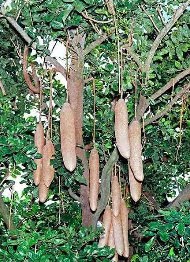
Sausage Tree

Sausage Tree

Kigelia africana

Local names
Muratina (Embu/Kikuyu), Muamba(Kamba)
Growth habit
Large, broad-capped tree growing up to 10 m - 18 m with massive, sausage-shapedpendulousfruits.
Propagation
Seed (extractfrommature,rottingpods).
Ecological benefits
The large, dark-red flowers bloom at night and are pollinated exclusively by bats. The fallen flowers and heavy fruits serve as food for baboons, game animals,andlivestock.1
Endangered #1
African Blackwood / Grenadilla

African Blackwood / Grenadilla

Dalbergia melanoxylon

Local names
Muvingo(Kamba/Embu)
Growth habit
Small, heavily branched, multi-stemmed thorny tree (5 m - 7 m) with a gnarledtrunkandextremelydense,darkpurple-to-blackheartwood.
Propagation
Seed (requiresnickingorsoakinginwater)orrootsuckers.
Ecological benefits
Critically over-harvested for the woodcarving and musical instrument industry. It fixes nitrogen, improves soil stability, and its dense canopyprovideshigh-valuenestingsafe-havensfordrylandbirds.
Endangered #2
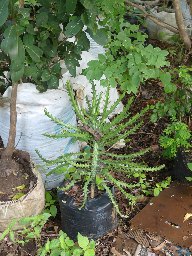
Tana River Euphorbia

Tana River Euphorbia

Euphorbia tanaensis

Local names
Kamwaria(Genericlocaltermforlargesucculent Euphorbias)
Growth habit
A massive, leafless, succulent tree growing up to 20 m - 25 m with a distinctcolumnartrunkandsegmented,green,photosyntheticbranches.
Propagation
Stem cuttings (must be allowed to callous over for a few days beforeplanting)orseeds.
Ecological benefits
One of Kenya's rarest endemic trees, facing imminent extinction due to agricultural encroachment. It provides specialized micro-habitats and nectarforarid-adaptednocturnalmothsandinsects.
Endangered #3
Tana River Poplar

Tana River Poplar

Populus ilicifolia

Local names
Mukomah(Pokomo/Coastregion)
Growth habit
Large, stately dioecious tree (10 m - 25 m) restricted strictly to riverine
Propagation
Rootsuckersorfreshseeds.
Ecological benefits
Endangered due to hydrologic changes and riverbank clearing. It acts as the primary anchor for riverbanks (riparian zones) in arid landscapes, preventing devastating flash-flood erosion and hosting threatened primates like the Tana River Red Colobus. The boles of
Endangered #4
African Sandalwood

African Sandalwood

Osyris lanceolata

Local names
Muthithi (Embu), Muthi(Kamba)
Growth habit
An evergreen, multi-stemmed, root-parasitic shrub or small tree (2 m – 6 m).
Propagation
Seed (must be planted alongside a host plant like Rharrus or Acaciaspeciesduetoitsobligateparasiticnature).
Ecological benefits
Heavily targeted by illegal poachers for its aromatic essential oils. It forms underground root connections that stabilize soil structures and dynamicsacrossfragileecosystems.
Endangered #8
Mukau

Mukau

Melia volkensii

Local names
Mukau(Embu/Kamba/Kikuyu)
Growth habit
Deciduous tree growing rapidly up to 10 m - 15 m with an open, spreading crown.
Propagation
Seed (requires highly specialized cracking of the hard woody endocarpandextractingtheseedkernel).
Ecological benefits
Excellent for agroforestry; drops leaf litter that improves soil nutrients without competing aggressively with crops for water. It is a fast-growing, drought-tolerant and termite resistant hardwood species suitable for timber. Currently,
Endangered #21
Tamarind

Tamarind

Tamarindus indica

Local names
Muthithi (Embu), Kithumula(Kamba)
Growth habit
Large, slow-growing, long-lived tree reaching up to 25 m with a dense, compactroundedcanopy.
Propagation
Seed(soakincoldwaterfor 24hours).
Ecological benefits
Offers deep, perennial shade that reduces ambient ground temperature, conserving soil moisture underneath for understory plants. Currently,
Endangered #6
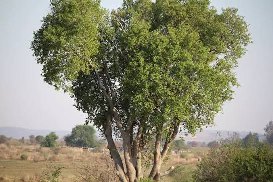
Baobab

Baobab

Adansonia digitata

Local names
Muamba (Kamba), Muramba(Embu)
Growth habit
Iconic, massive tree with a hugely swollen, water-storing trunk (10 m – 20 m tall and up to 10 m wide).
Propagation
Seed (requires boiling water treatment or mechanical scarification ofthetoughshell).
Ecological benefits
Increasingly threatened by land clearance and commercial uprooting. A single tree functions as an entire ecosystem, storing thousands of liters of water, providing nesting cavities for hornbills, and feeding elephants, baboons, and bats. The local threats include a lack of natural regeneration, illegal uprooting for international export (dubbed "biopiracy"), and habitat destruction for agriculture.
Endangered #7

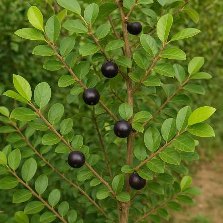
Wild Aloe / Bitter Aloe

Aloe Species (A. secundiflora, A. turkanensis, A. scabrifolia)
Local names
Kiluma (Kamba), Mukari(Embu)
Growth habit
Succulent rosette-forming perennials, ranging from stemless (A. secundiflora) to shrubby, multi-branching structures up to 2 mtall.
Propagation
Leaf/stemoffsets("pups")orseeds.
Ecological benefits
Threatened by illegal harvesting for cosmetics. They bloom during intense dry periods when other flora fail, providing vital emergency nectar tosunbirdsandstabilizingrocky,sun-bakedhillsidesagainsterosion.
Endangered #8

Winter Cassia, Scrambled Egg Bush, Sticky Pod, Wild Cassia

Senna singueana (formerly Cassia singueana)

Local names
Muthithi (Kikuyu / Meru / Embu), Muthithio(Kamba)
Growth habit
Variable thorny bushes and trees (3 m - 12 m).
Propagation
Scarifiedseeds.
Ecological benefits
The bright dry-season flowering provides a critical, lifesaver nectar source for bees, butterflies, and insects when most other flora are dormant. Soil Improver & Green Manure and Wildlife & Livestock Fodder: Systematically wiped out across South East Kenya for charcoal production& Over-exploitation. Their loss results in catastrophic desertification, loss of nitrogen-fixing capacity, and microclimatecollapse.
Endangered #9
East African Greenheart / Pepper-bark Tree

East African Greenheart / Pepper-bark Tree

Warburgia ugandensis

Local names
Muthiga (Embu/Kikuyu), Muziga(Kamba)
Growth habit
Large, spreading evergreen tree (15 m - 25 m) with a dense crown and highlyaromatic,pepperybark.
Propagation
Freshseedsorwildlings.
Ecological benefits
Highly endangered due to aggressive debarking for traditional medicine. The high oil content of its fruits makes it a primary food source for frugivorousforestbirdsand monkeys.
Endangered #10

Myrrh / African Bdellium

Commiphora Species (C. africana, C. eminii)

Local names
Mutungati (Embu), Kitungati(Kamba)
Growth habit
Small, spine-tipped, resinous trees (3 m - 8 m) that shed leaves during dry months.
Propagation
Large stem cuttings (cuttings strike root very easily when planted directlyintohedges).
Ecological benefits
Clearing for agricultural expansions threatens these species. They provide essential dry-season browse and aromatic resins utilized by native nestingbees.
Endangered #11
Makueni Millettia

Makueni Millettia

Millettia vatkei

Local names
Mwethia(Makueni/Kambavariant)
Growth habit
Small, rare leguminous tree or shrub (3 m - 6 m).
Propagation
Seed.
Ecological benefits
Critically endangered micro-endemic species in South Eastern Kenya. It acts as an invaluable nitrogen fixer in sandy soils and supports specializedlocalinsectpopulations.
Exotic #1
Teak

Teak

Tectona grandis

Growth habit
Large deciduous tree (20 m - 30 m)withmassiveleaves.
Propagation
Seed (requiressoaking/dryingcycles).
Ecological benefits
Positive: Premium timber; suppresses weeds. Risk: High waterconsumption;lownativebirdbiodiversitysupport
Exotic #2
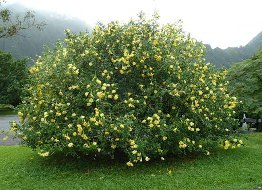
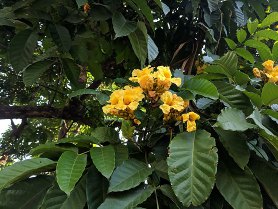
Siamese Cassia / Muveshi

Siamese Cassia / Muveshi

Senna siamea

Growth habit
Mediumtree(10m-15m)withdenseyellowblooms.
Propagation
Freshseeds Biodiversity & Ecological Footprint: Positive: Excellent windbreak and fuel-wood alternative to save indigenoustrees.Doesnotfixnitrogen.
Ecological benefits
Positive: Excellent windbreak and fuel-wood alternative to save indigenoustrees.Doesnotfixnitrogen.
Exotic #3
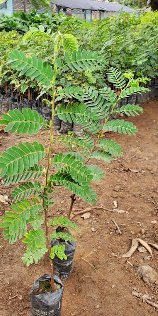
Leucaena

Leucaena

Leucaena leucocephala & L. diversifolia

Growth habit
Fast-growing,feathery-leavedsmalltree(5m–15m)
Propagation
Seed(hotwatertreatment).
Ecological benefits
Superb protein-rich livestock fodder. Fixes nitrogen rapidly butcanbecomeaweedifunmanagedaroundwatercourses.
Exotic #4
Apple-ring Acacia

Apple-ring Acacia

Faidherbia albida

Growth habit
Largetree(15m–30m).Shedsleavesintherainyseason
Propagation
Seed(scarified).
Ecological benefits
Exceptional Agroforestry Tree: "Reverse phenology" means it fixes nitrogen and provides shade during the hot dry season, then drops leaves during rains, feeding crops below. It is knownforimprovingsoilfertility.
Exotic #5
Falcon's Claw Acacia

Falcon's Claw Acacia

Acacia polyacantha

Growth habit
Largetreeupto 20mwithwhitishbarkandhookedthorns
Propagation
Seed
Ecological benefits
High-capacity nitrogen fixer; excellent for reclaiming exhaustedagriculturalsoils.
Exotic #6
Kei Apple

Kei Apple

Dovyalis caffra

Growth habit
Dense,aggressivelyspinyevergreenshrub(3m-5m).
Propagation
Seed.
Ecological benefits
The ultimate living security fence. Protects homesteads whileitsyellow,acidicfruitsfeedlocalbirdsandsmallmammals.
Exotic #7
Calliandra

Calliandra

Calliandra calothyrsus

Growth habit
Small,multi-stemmedshrubbytree(4m–6m)withpinkpowder-puffflowers.
Propagation
Seed
Ecological benefits
Highly effective for soil erosion control on slopes and serves asexcellentforagefordairygoatsandhoneybees.
Exotic #8
Blue Gum / Red Gum

Blue Gum / Red Gum

Eucalyptus camaldulensis & E. tereticornis

Growth habit
Extremely tall, fast-growing trees (20 m – 40 m) .
Propagation
Seedlingsgrowninnurseries
Ecological benefits
HIGH RISK: Highly controversial. Excellent for fast timber/ poles, but they deplete underground aquifers rapidly. Should never be planted near riparian zones orwatersprings.
Fruit Trees #1

Mangifera indica

Mangifera indica (Mangoes)

Growth habit
Large, symmetrical evergreen tree (10 m - 20 m)withadensecanopy.
Propagation
Graftingontolocal"dodo"seedrootstocksfordroughtresilience.
Ecological benefits
Apple, Ngowe,and Kentvarietiesgraftedontohardylocalrootstocks.
Fruit Trees #2

Punica granatum

Punica granatum (Pomegranates)

Growth habit
Neat, rounded, multi-stemmed shrub or small tree (3 m - 5 m).
Propagation
Hardwoodstemcuttingsorseed.
Ecological benefits
Highly drought and salt-tolerant. Its bright red flowers attract insect pollinators, and the tough-husked fruits offer food to strong-beaked birds like parrots.
Fruit Trees #3

Psidium guajava

Psidium guajava (Guava)

Growth habit
Tough, small evergreen tree (3 m - 8 m)withsmooth,peelingbark.
Propagation
Seed orair-layering.
Ecological benefits
Highly adaptable to variable ASAL rainfall. Produces abundant fruits that support a massive network of local birds and insects, which in turn improves thewiderecosystem'shealth.
Fruit Trees #4

Persea americana

Persea americana (Avocado)

Growth habit
Medium to large tree (10 m - 15 m).
Propagation
Grafting (e.g., Hass or Fuertevarietiesonhardyrootstocks).
Ecological benefits
Requires deep valleys, river borders, or dedicated drip-irrigation tosurviveinsemi-aridzones.
Fruit Trees #5

Musa acuminata

Musa acuminata (Banana)

Growth habit
Large, herbaceous plant with a pseudostem (2 m - 5 m).
Propagation
Tissuecultureorrootsuckers.
Ecological benefits
Must be planted in deep trenches, swales, or greywater dischargezonestosurvivedryspells.
Fruit Trees #1

Prioritize indigenous species in all compensation areas. 2. Establish mixed-species planting blocks. 3.

Prioritize indigenous species in all compensation areas. 2. Establish mixed-species planting blocks. 3.

Why Indigenous Species Matter

Carbon Sequestration

Native trees build long-term carbon sinks in degraded semi-arid landscapes.

Watershed Protection

Deep-rooted species stabilize soil, improve water retention, and protect catchments.

Biodiversity Recovery

Indigenous trees support pollinators, birds, wildlife, and local food chains.

Community Livelihoods

Fodder, gum, fruit, and timber provide sustainable income for rural communities.

Interested in Our Reforestation Programs?

Partner with Virgin Africa to restore semi-arid ecosystems through community-led tree planting initiatives.

Contact Our Team